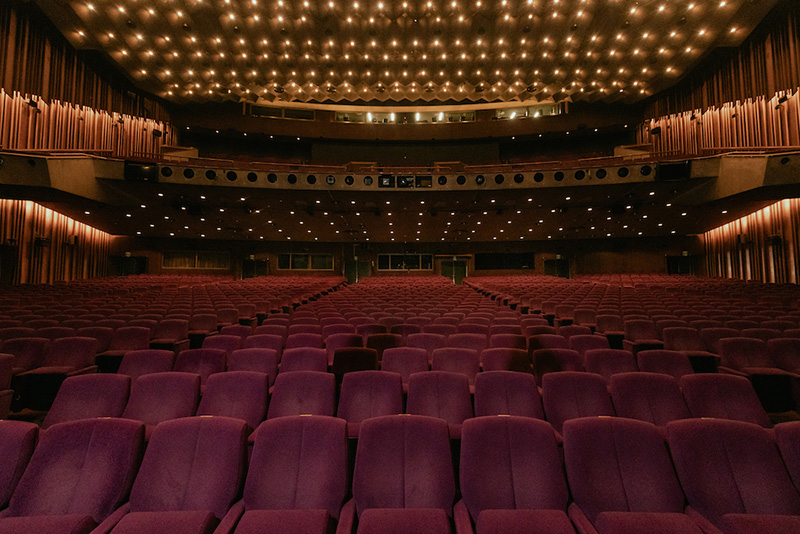
In February 2025, the second IMPERIAL THEATRE was temporarily closed.
Designed by Abe Architects & Engineering and the architect Yoshiro Taniguchi, the IMPERIAL THEATRE was completed in 1966, and endeared itself to many theatre-goers over the succeeding period of more than half of a century. In keeping with the pioneering spirit it inherited from the first theatre, which opened in 1911, it was constructed with the aim of making it one of the top theatres in the world. It was the venue for the performance of theatrical works in a wide range of genres that made full use of its large-scale, advanced stage machinery without equal in Japan, and what was then the latest audio and lighting equipment.
Under the banner of “merging popularity with artistry,” the motto of TOHO Co., Ltd., its Theatrical Division launched the IMPERIAL THEATRE Legacy Collection along with the theatre’s temporary closure.
Materials that otherwise would have been discarded when the theatre was dismantled, such as seating, lighting fixtures, railings, and natural stone from pillars, are being reborn as new items.
To assemble an assortment ranging from furniture to small items, the plan recruited seven creators and companies (Yabashi Marble Co., Ltd., HIGHTIDE, Sae Honda, Yuma Kano, Yoh Komiyama, SAKUMAESHIMA, and Hisakazu Shimizu(S&O DESIGN Inc.)).
From the collected materials, each group selected those which they wanted to sublimate for their own project, and developed a total of 30 types of items. The products were manufactured mainly by Karimoku Furniture Inc.
The exhibition space for the “IMPERIAL THEATRE Legacy Collection Exhibition” held was designed by YOHAK DESIGN STUDIO.
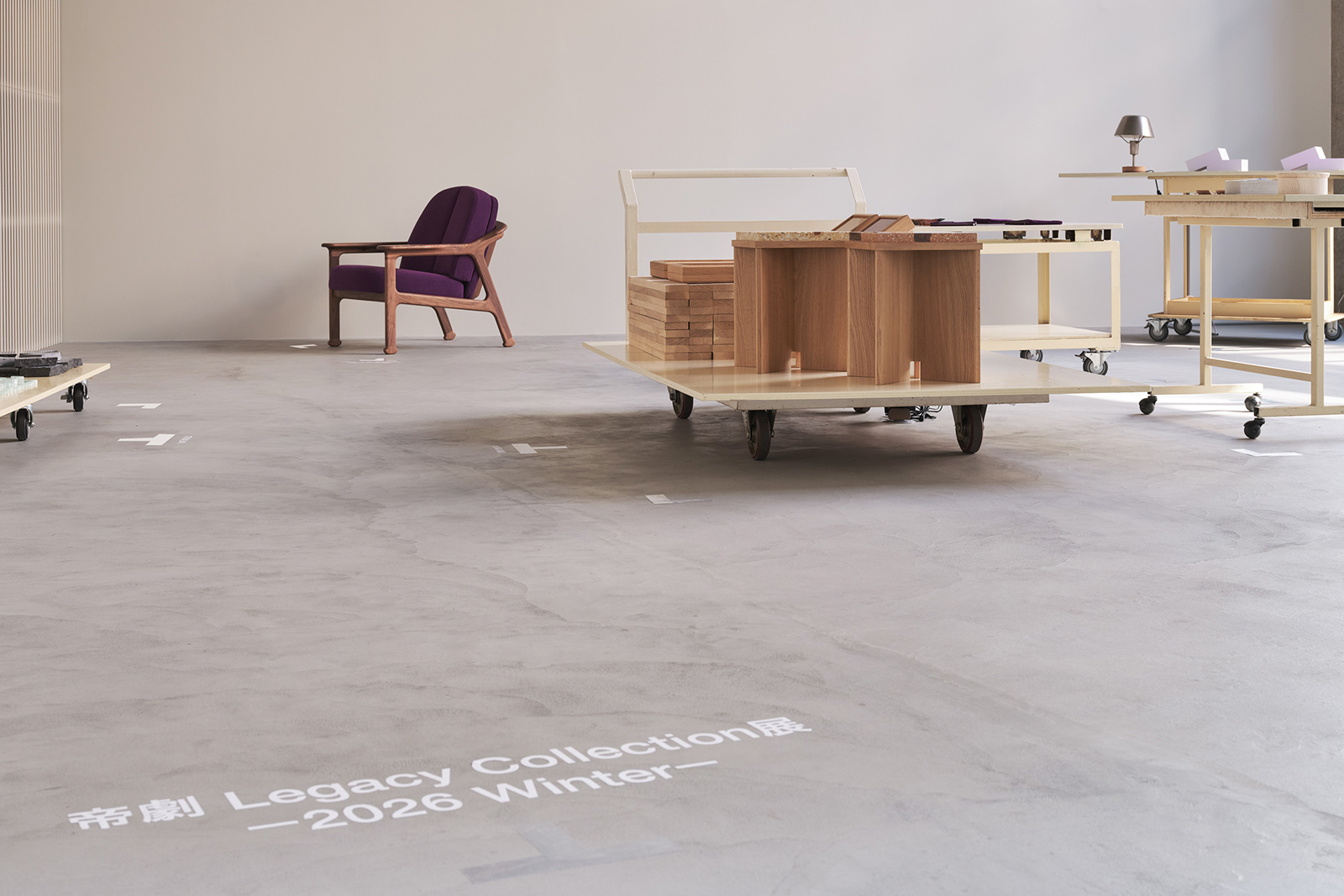
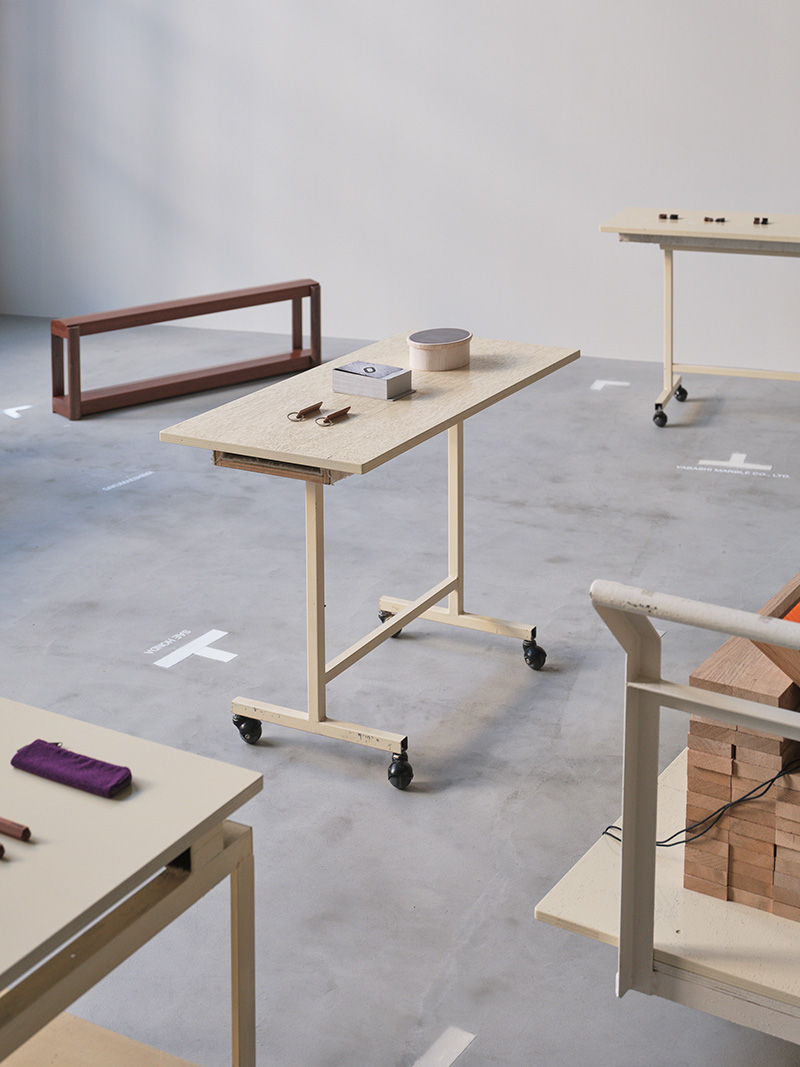
The exhibition space is constructed to resemble a stage with markings to show the positions of actors and set props on it. The layout of the 30 items and the materials from the IMPERIAL THEATRE is based on the image of a single scene in a play.
For the display platforms, the exhibition uses handcarts from the Karimoku Furniture factory that produced each item.
In the process of product manufacture, the carts moved in correspondence with the markings in the factory. The products, materials, and tools utilized in the manufacturing process came together from various places into one space, where they were rearranged in line with the position markings for display.