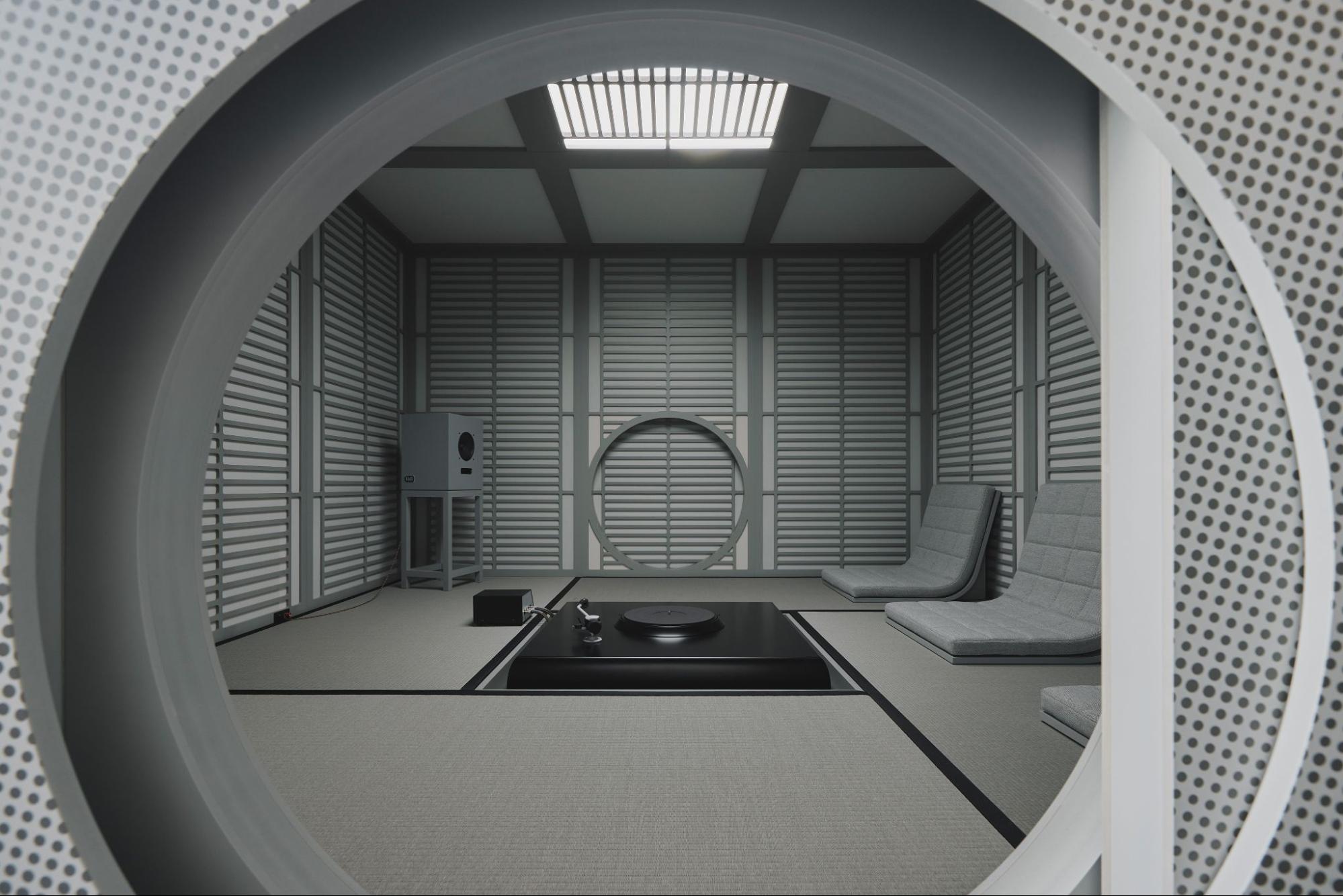
In October 2024, Karimoku Furniture Inc. launched a new project titled “KARIMOKU RESEARCH.” The “Survey” at the core of the project takes up four themes a year, and is conducted in partnership with creators, designers, artists, companies, and other parties, both inside and outside Japan, on each theme. The insights obtained from the “Survey” provide the basis for the display and development of new solutions that are not confined to furniture.
The theme of the fourth “Survey” is FORM FOLLOWS FEELINGS. The “Survey” delved into the questions of “what is function and how does it make us feel?,” and Devon Turnbull, a New York City-based audio designer and artist participated as a researcher. Through his own brand OJAS, Turnbull builds high-fidelity speaker systems and listening rooms, creating immersive experiences worldwide where sound, space, and presence intersect.
In the world of design, “function” has long been measured by usefulness. What Turnbull is pursuing, in contrast, is a type of form that expresses the natural, emotional essence of music and deeply moves the user. From February 21 to June 5, 2026, an exhibition titled Between Space & Sound 「間の音」is being held by OJAS Tokyo and Karimoku Furniture at the KARIMOKU RESEARCH CENTER. What sort of repeated dialogue did the two engage in the lead-up to this exhibition? To find out, Brad Holdgrafer, Creative Director of KARIMOKU RESEARCH, interviewed Turnbull.
Part 2 of this article takes a behind-the-scenes look at the technical challenges faced at the factory in Aichi, the heart of Karimoku Furniture’s manufacturing. This story unveils the realization of the wooden horns by 3D-machining technology, the development of the three speaker models, named Sanjo, Rokujo, and Nurikabe, and the birth of a furniture collection that acoustically reinterprets Japanese aesthetics.
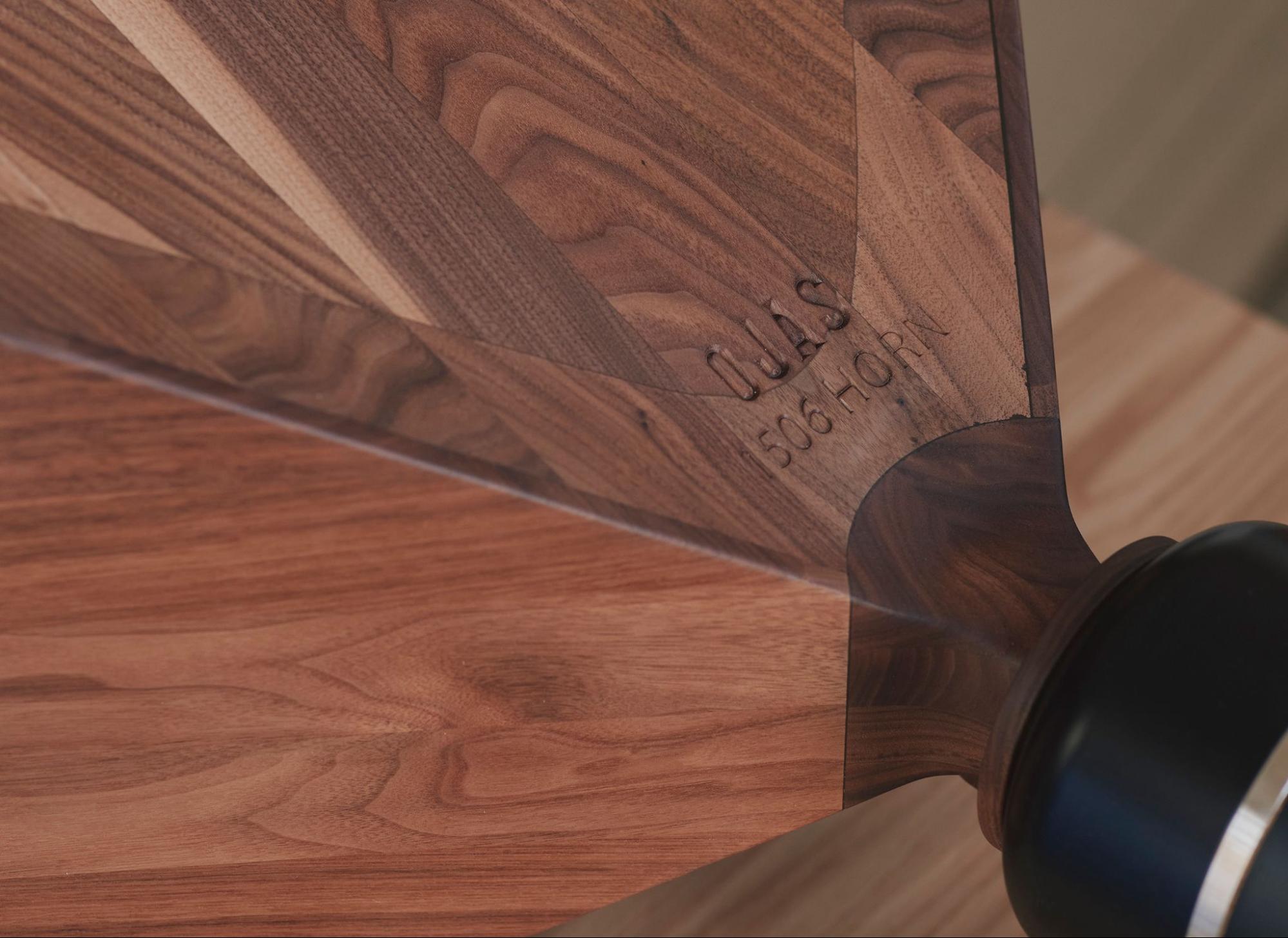
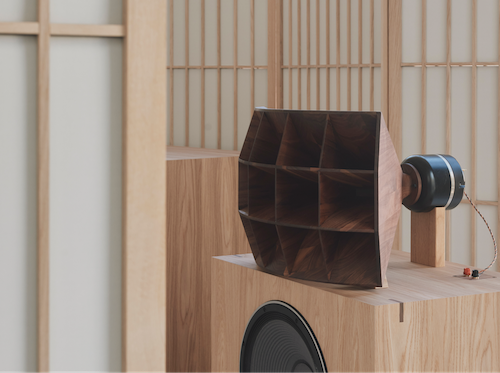
When he visited the Karimoku Furniture factory in Aichi, Turnbull solidified his confidence in the overwhelming scale and precision of their manufacturing capabilities. He was also deeply moved by the suggestion made by Hiroshi Kato, Vice President of Karimoku Furniture, to “think beyond the framework of speakers.” Among others, the realization of the large speaker horns in wood is a symbolic fruit of this project. While such horns are typically made of cast aluminum, they were perfectly rendered in wood using the 3D-machining technology of Karimoku Furniture.
“Clearly the manufacturing capability, the tolerances and resources are more than sufficient to make speaker cabinets. (…) I mean the resources when you go to the factory are incredible. (I thought) what couldn't you make here? (…) I sent them this model of a horn. It's an original horn design called the …multicellular sectoral horn. (…) We're casting these horns out of aluminum usually. I said, do you think you can make this out of wood? (…) And to my total surprise, they basically already had a complete prototype on my second visit to the factory.” (Turnbull)
While wooden horns have a mellower and warmer tone compared to metal ones, they require extremely advanced woodworking technology to prevent deformation and cracking caused by humidity. Drawing upon their profound understanding of materials and seasoned skills, the artisans of Karimoku Furniture materialized Turnbull’s meticulous acoustic designs. Turnbull reflects on the thrill of witnessing his ideals connected with traditional Japanese artisanal craft:
“Particularly in Japan there is a precedent for wood horns and they have a huge following. (…) But multicellular wood horns are super delicate. This project with Karimoku Furniture was the perfect opportunity for manufacturing such a delicate product with the best technology and installing it. (…) You take just a pile of wood and a bunch of wire, and you build a beautiful-sounding speaker cabinet. When you take something from raw materials and all of a sudden it has this function—it’s really magical, no matter how many times you experience it.” (Turnbull)

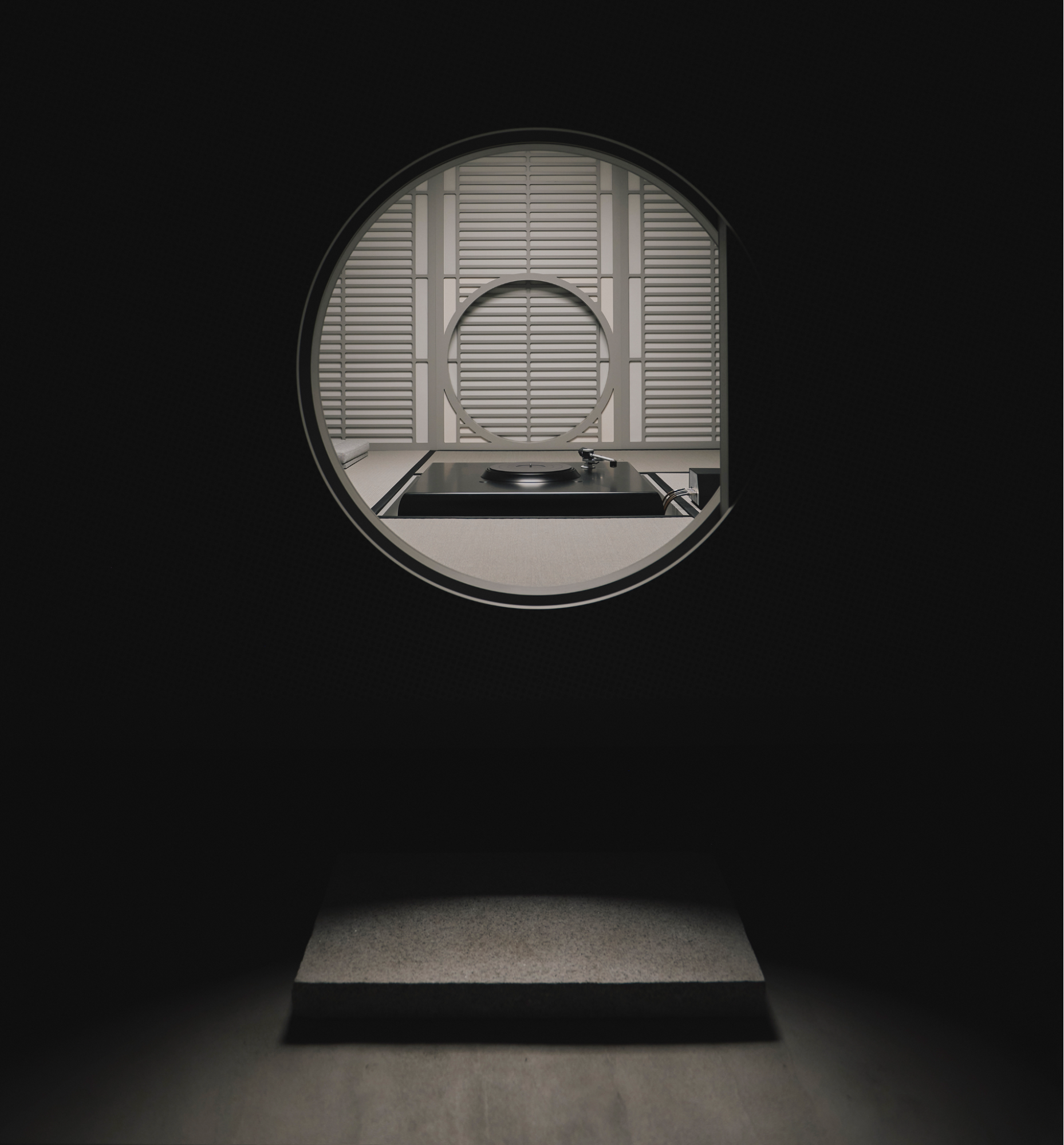
Another key pillar of this project was the creation of the Sound House, a mobile listening room that takes inspiration from the architectural prototype of a traditional Japanese tea room. Turnbull had long envisioned an autonomous, perfect acoustic space as a means of overcoming the challenges of controlling sound within a gallery environment.
“The tea room (…) in many ways just epitomizes Japanese aesthetics. (…) Every time I've been to a tea room I think (…) well, what would my version of this be?
And of course my version of this has music in it, which is kind of (…) a sacrilege, as the tea room is supposed to be super silent. (…) Collaborating with an iconic Japanese manufacturer (like Karimoku Furniture) (…) gives me a real opportunity to participate (…) as an outsider and do it in a respectful way (so) that I can have a dialogue with Japanese design.” (Turnbull)
This space, appearing as a tranquil, single large wooden mass stripped of all decoration, was materialized through Karimoku Furniture’s meticulous craftsmanship. An experience of exceptional sonic purity that shuts out all external noise awaits those who step inside it. At the tea ceremony on the opening day, its rituals dovetailed with Turnbull’s audio philosophy, presenting a new expression of Ma that transcends traditional frameworks.
“I’m an outsider in both the audio scene and design scene. I can therefore claim ignorance, like I didn’t know I was breaking that rule. I’d like to think that like my participation in both the Japanese audio scene and also the Japanese design scene in terms of like this Sound House is like, I guess I can also kind of claim ignorance. Sometimes you kind of like find your way into some new space that people find interesting or exciting.(…) For me, it was a very exciting challenge to make a reinterpretation of the Japanese tea room as an iconic cultural device and turn it into a small mobile structure for listening.” (Turnbull)
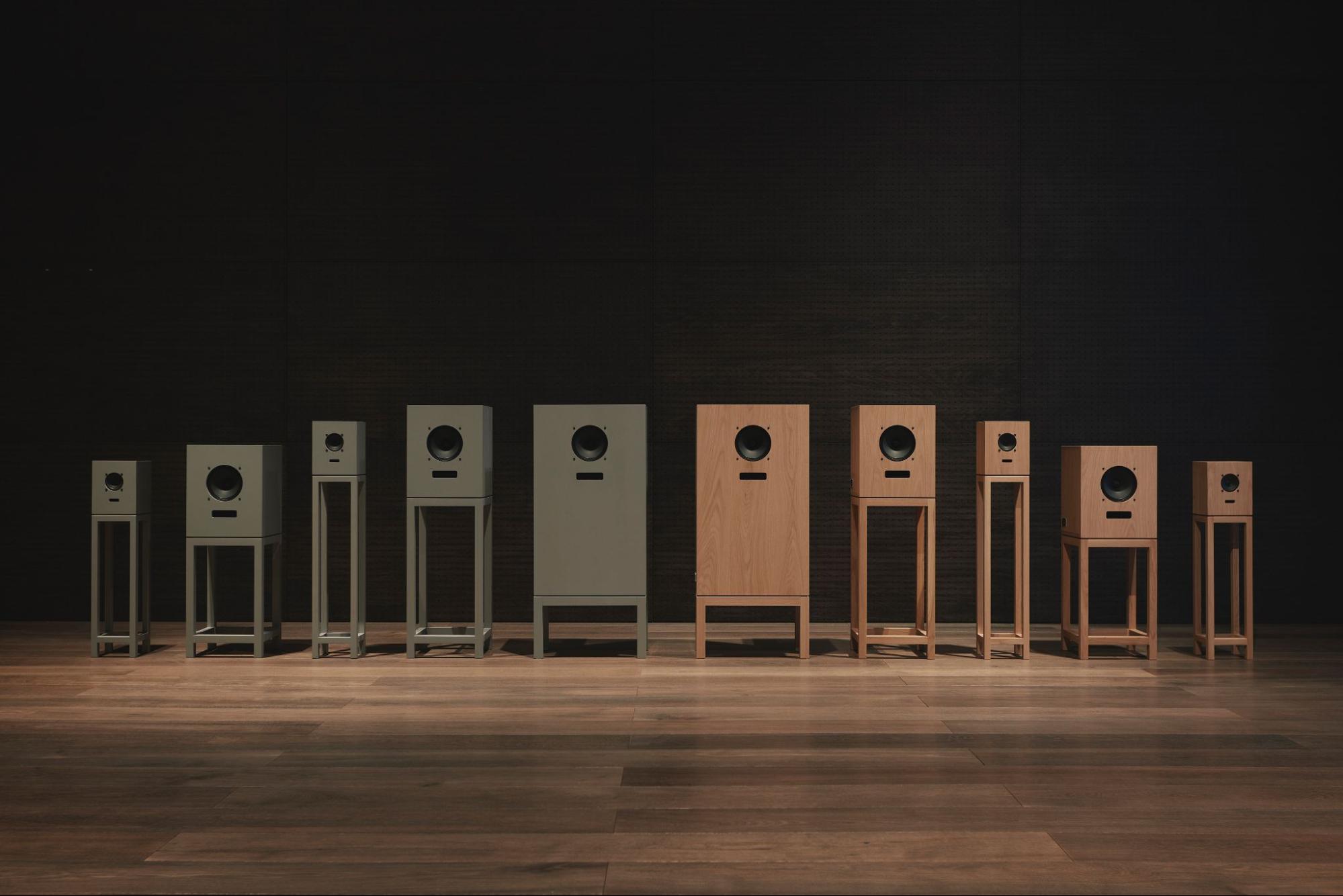
Through this installment of the “Survey,” Turnbull pursued an unprecedentedly intimate audio experience that fits the scale of the Japanese living space. Establishing a base in Tokyo allowed him to experience first-hand the deep “stillness” of Japanese living, distinct from that of the West. Building on this experience, he conceived the Sanjo, Rokujo, and Nurikabe as optimal speakers for such spaces.
“I think (…) Japan is just a much quieter place than anywhere else I've ever been. And every color is more vivid when the background is very dark. (…) This deep level of silence that you experience in Japan makes the listening experience really different. (…) My house is very small even by Japanese standards. When we were developing the drivers (…) the drivers just happened to be a three-inch and a 6-inch. The san-inchi (three-inch) driver would work very well in the sanjo (three-mat) room, and the roku-inchi (six-inch) one, in the rokujo (six-mat) room. (…) Japanese people will immediately know what a rokujo room feels like in terms of space.” (Turnbull)
Karimoku Furniture manufactured the cabinets, which feature drivers equipped with Alnico magnets made by Fostex, a legendary Japanese manufacturer. In addition, the model designed in a larger size due to acoustic necessity was affectionately given the name “Nurikabe.” Named after a Japanese folk monster that blocks the path yet possesses a playful spirit, this speaker reflects Turnbull’s perspective, viewing sound itself as something to be cherished.
“The name ‘Nurikabe’ was chosen by Japanese friends of mine I first showed it to, and is kind of an inside joke. I thought it fit the form perfectly. (…) It suddenly appears like a wall, but is definitely not evil. This speaker exudes a presence like a sculpture in a silent room. I hope it will show people a new horizon in sound.” (Turnbull)
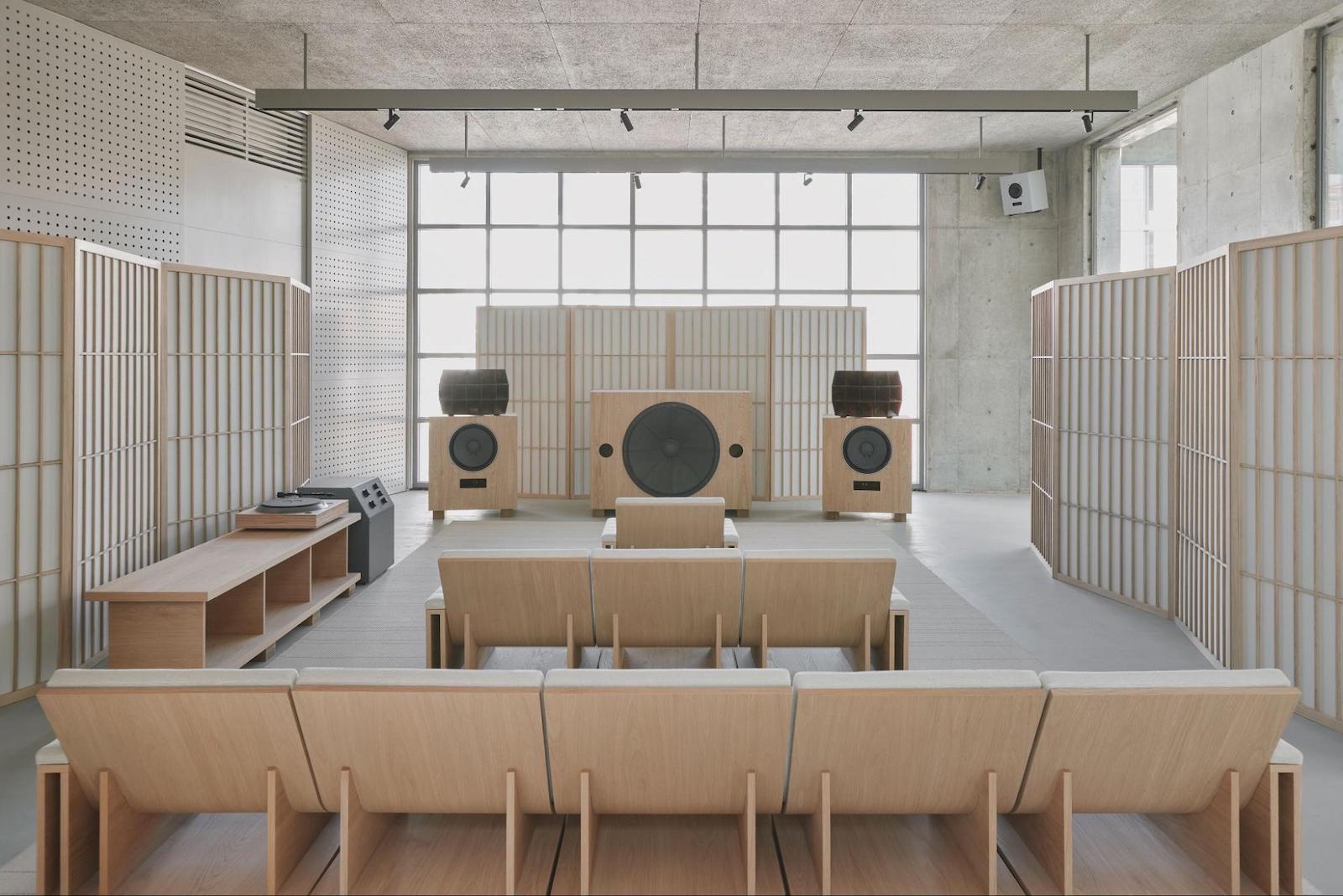
Turnbull’s “Survey” was not confined to speakers; it extended to the domain of furniture, including chairs and partitions. While humbly insisting that he is not a product designer himself, he has a strong determination at the core to craft every element required for the ultimate listening experience with his own hands. Paying homage to his beloved PK31 sofa by Poul Kjaerholm, the seating he unveiled this time was born through the singular process of disassembling and reconfiguring a speaker’s form.
“Designing seating has always been like a dream of mine, but it was also the most difficult challenge for me. The seat height and pitch are like a direct reference to the Poul Kjaerholm PK 31. (…) I took the cabinet apart, putting it back together like in the form factor of the chair and the radius of the seat. At Karimoku Furniture’s factory, I saw how plywood was shaped over and over until they arrived at an ergonomic solution. This convinced me that I could take an experimental approach with confidence.” (Turnbull)
Similarly, the “room dividers” (partitions) inspired by shoji screens were not made to serve only as visual divisions; Turnbull added an acoustic function by incorporating sound-absorbing material. Generally speaking, acoustic panels are apt to be considered sterile and ugly, but he beautifully sublimated them by using Japanese aesthetics. The dividers were the fruit born of an idea that he had nurtured for a long time.
“Most people forgo acoustic treatment (…) because acoustic panels can be so ugly a lot of the time. So a long term goal of mine has been to beautify them (…) and being able to work into a Japanese aesthetic. I have loved witnessing that “aha” moment when people walk in the room and notice that they are not just room dividers but also have a sound-absorbing function. It’s been a very enjoyable experience for me, too.” (Turnbull)
This installment of the “Survey” by Turnbull and Karimoku Furniture is a record of the interdisciplinary resonation of furniture and audio, and Japanese aesthetics and contemporary design.
Turnbull’s highly thoughtful contrivances are evident throughout this collection, as exemplified by the large wooden horn made with 3D-machining technology and the creative transformation of the structure of speaker interiors into a form of seating.
This collaboration combined the new outlooks presented by Turnbull and the earnest attitude toward manufacturing cultivated by Karimoku Furniture. The products resulting from it have been well received, bringing a fresh stimulus to the manufacturing site. This is bound to be a major harvest for the project as well.