In October 2024, Karimoku Furniture Inc. launched a new project titled “KARIMOKU RESEARCH.” The “Survey” at the core of the project takes up four themes a year, and is conducted in partnership with creators, designers, artists, companies, and other parties, both inside and outside Japan, on each theme. The insights obtained from the “Survey” provide the basis for the display and development of new solutions that are not confined to furniture.
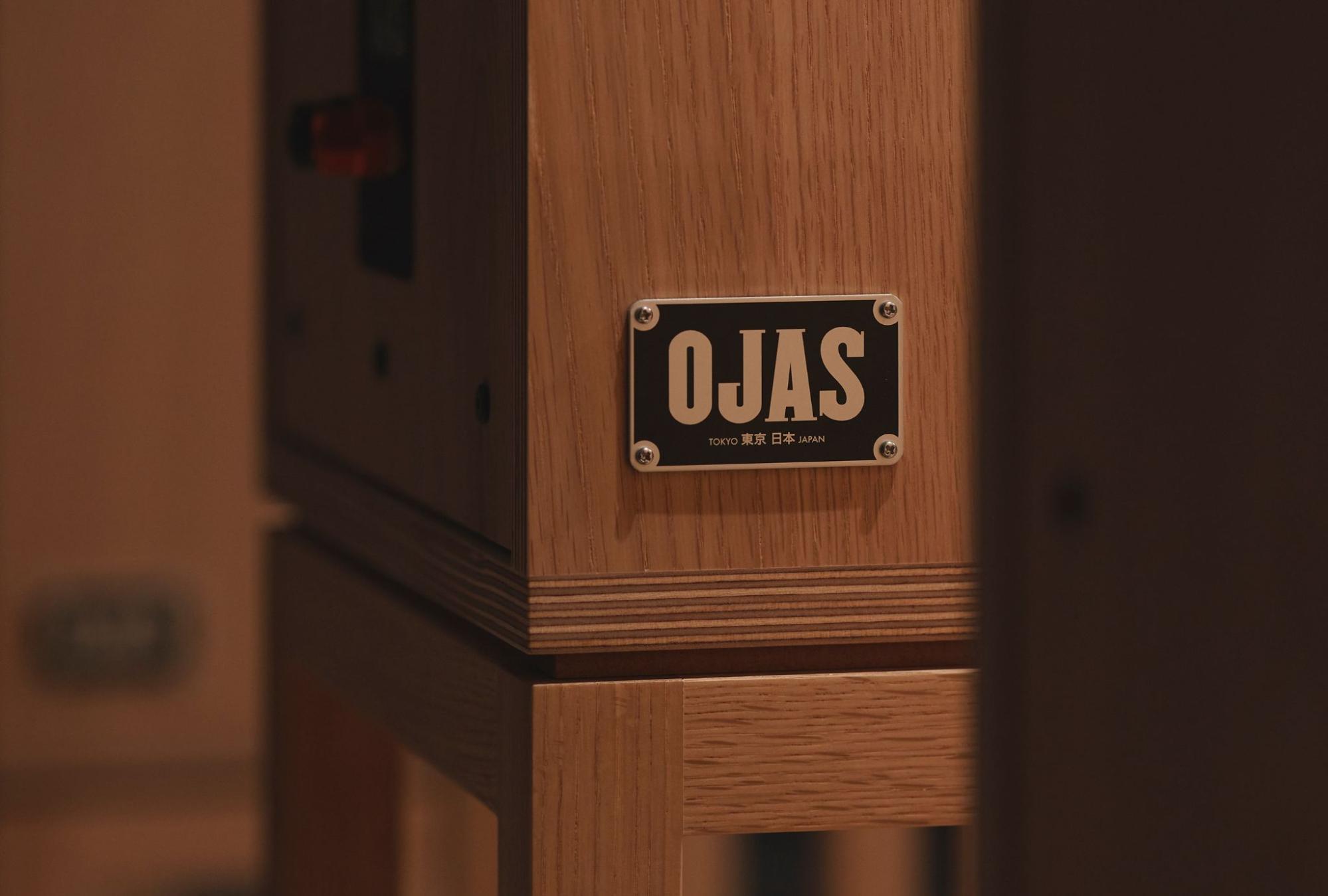
The theme of the fourth “Survey” is FORM FOLLOWS FEELINGS. The “Survey” delved into the questions of “what is function and how does it make us feel?,” and Devon Turnbull, a New York City-based audio designer and artist participated as a researcher. Through his own brand OJAS, Turnbull builds high-fidelity speaker systems and listening rooms, creating immersive experiences worldwide where sound, space, and presence intersect.
In the world of design, “function” has long been measured by usefulness. What Turnbull is pursuing, in contrast, is a type of form that expresses the natural, emotional essence of music and deeply moves the user. From February 21 to June 5, 2026, an exhibition titled Between Space & Sound 「間の音」is being held by OJAS Tokyo and Karimoku Furniture at the KARIMOKU RESEARCH CENTER. What sort of repeated dialogue did the two engage in the lead-up to this exhibition? To find out, Brad Holdgrafer, Creative Director of KARIMOKU RESEARCH, interviewed Turnbull.
Part 1 of this article describes Turnbull’s passion for audio engineering, which was the starting point of his career, and his strong ties with Japanese culture, and especially Japanese audio, over the last 25 years. It also traces the fated path that led to his encounter with Karimoku Furniture, his “ideal partner,” and the moment their visions began to resonate.
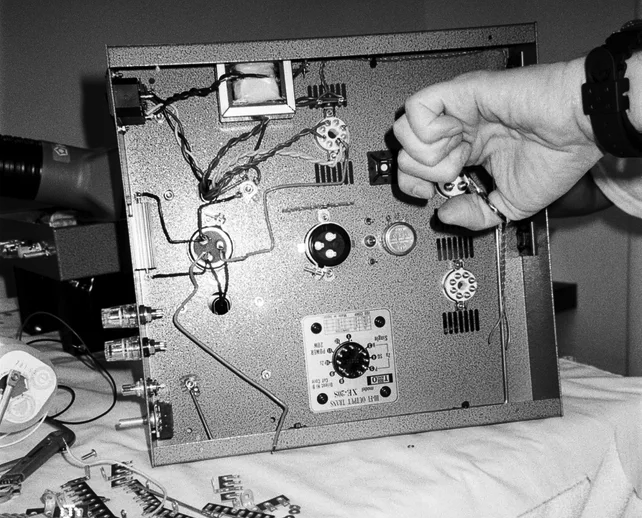
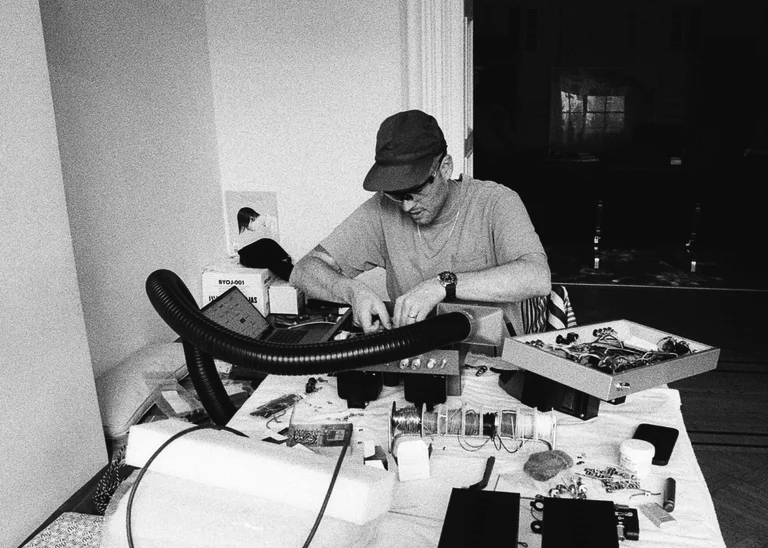
When speaking of Turnbull’s career, many people probably think of his brilliant achievements in the world of street culture and fashion in New York. In response to a question from Holdgrafer, however, he said that, as far as his self-awareness was concerned, his roots in fact always lay in sound. He devoted his high school days to setting up sound systems, and majored in audio engineering in college. He remarked that his subsequent activities in the world of design were a series of chances that visited him, often separate from his original intentions.
“Well, actually my education was in sound. I have a degree in audio engineering. So I like in high school was very drawn to sound and music. I was always the guy like setting up the sound system. (…) I would just sit in my room and listen to music. And of course DJ culture; I was a DJ. For me, sound was always at the center.” (Turnbull)
Turnbull studied audio out of a wholehearted desire to do work related to music. What led him in an unexpected direction were the T-shirts born of OJAS, a creative platform he launched in New York in the early 2000s. Initially, this brand bearing the name OJAS, which was also his graffiti tag, was the only medium of self-expression not requiring permission for Turnbull, who had not received a formal education in design. The T-shirts attracted an unexpected amount of attention, and the opportunities he had sought through his quest in the world of sound began to pour in through the channel of design. Turnbull looked back on his past period of immersion in visual design in the following way.
“Graffiti was attractive to me because it was something that anyone (could do). You don't need permission to participate in it. (It was a channel open to me.) I started making myself T-shirts with OJAS, my graffiti tag, on them. And I was really surprised how that started garnering a lot of attention and a lot of the sort of opportunities that I was looking for with sound started to present themselves through design instead. So in fact, design, the period of my career that was strictly visual design, was sort of a detour in the story of my life working with sound.” (Turnbull)
The OJAS of the past became known as an iconic supplier of street fashion, but has since evolved into a brand dedicated to handmade high-end audio, Turnbull’s life work. To him, OJAS is a platform for practice aimed at consolidating audio engineering, his roots, and the aesthetics of design he acquired during his detour. After an interval of decades, the path to sound, which once appeared to be closed, has reopened as his new lane accompanied by fuller expression.
“All of these interests that I have which are all really kind of rooted in my youth have all sort of become part of my practice (and OJAS) — visual design, industrial design, graphic design, and of course all-around acoustic design.”(Turnbull)
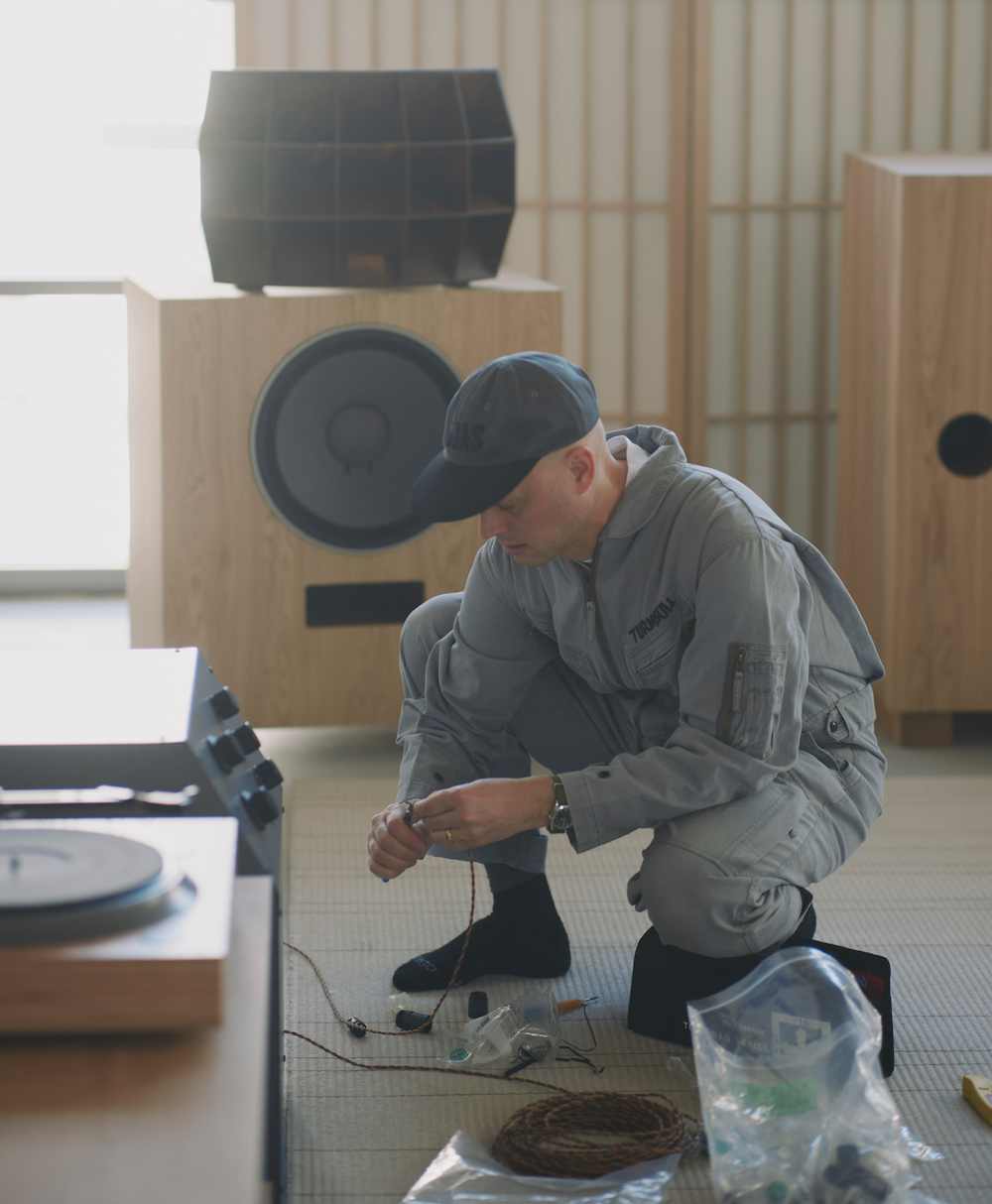
His relationship with the country goes back to 1998, when he first came to Japan. He was jolted by the striking culture radiating from Tokyo in the 1990s, and became a frequent visitor thereafter through his brand's activities. These visits went beyond merely sourcing production and observing trends; what most fascinated him was the world of Japanese audiophiles, so stoic and artisanal as to be unequalled even worldwide.
“That is the most important influence in my work today. I would go to Akihabara electric festivals and spend a few days in Fukushima with a Japanese audiophile in his 70s. These older audiophiles were purely exploring sound without a single thought about Western perspectives. It took a long time—about 25 years—until I felt that I could truly participate in this culture.” (Turnbull)
Turnbull said he was bowled over by the relentless spirit of inquiry and distinctive aesthetics of Japanese audiophiles. Instead of simply consuming ready-made products, they dig up vintage parts and assemble systems based on their own theories. In them, Turnbull found the very artist he aspired to be.
The very accumulation of results from the “Surveys” conducted in Japan over the past quarter of a century forms the somehow nostalgic yet extremely refined and unique presence of OJAS sound systems. The torch passed to OJAS from Japanese predecessors is now being sublimated to further heights through a new partnership and the technical expertise of Karimoku Furniture.
“I participate in both the audio scene and the Japanese design scene. It is the process of sometimes using my status as an outsider who doesn’t know the rules or asking for someone’s permission in order to find my way to a new space no one has ever before seen.”(Turnbull)
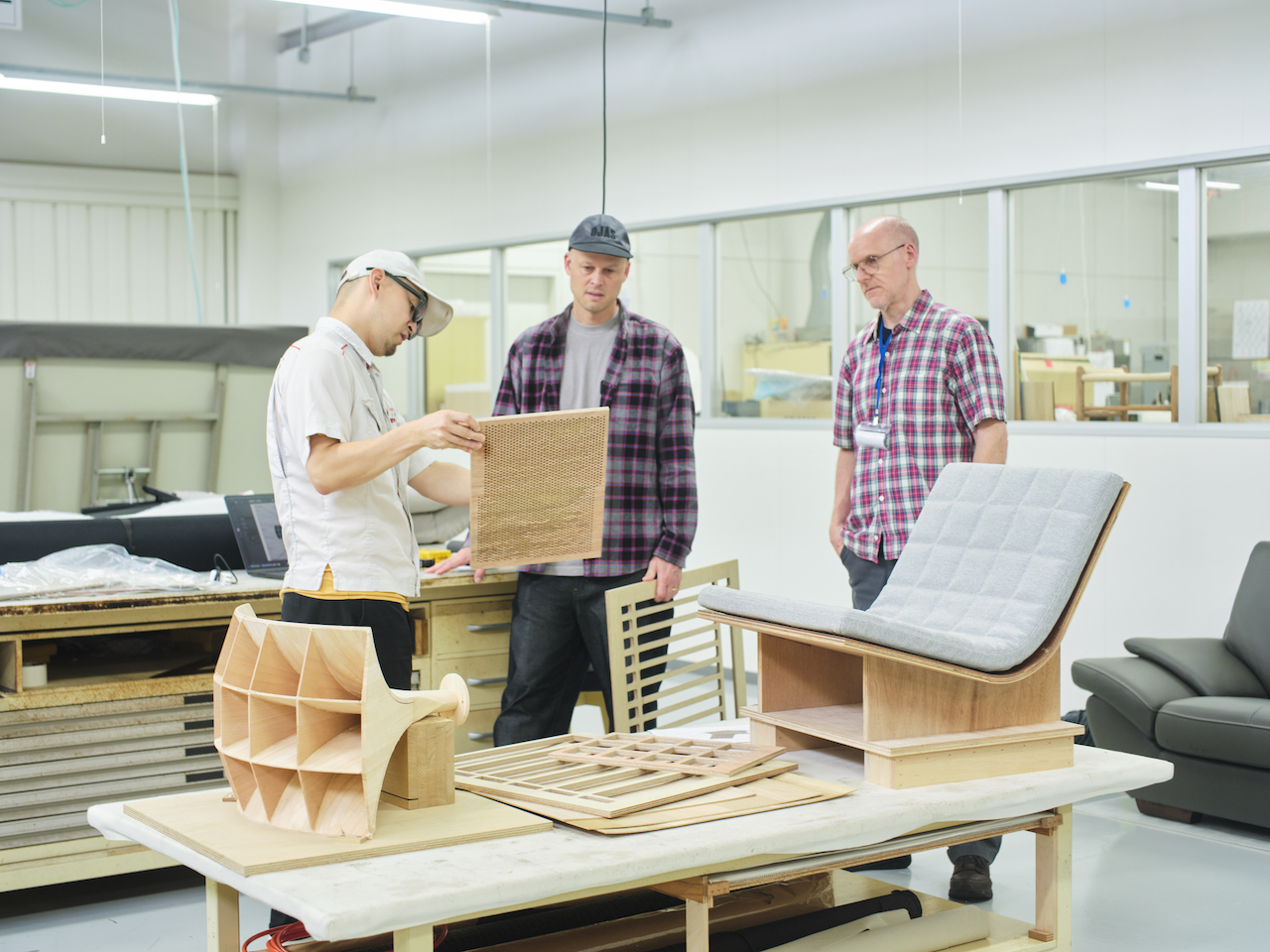
His encounter with Karimoku Furniture was nothing short of fated. About a year before, while renovating his new house in Tokyo, he began a serious search for furniture to enrich his living space. He intuitively felt the importance of a sophisticated, distinctively Japanese living environment and the products to harmonize with it.
“Japanese design has an overwhelming beauty but is also delicate. Things like shoji screens, tatami mats, and ceramics really only work in the controlled Japanese environment. So I started, of course, researching Japanese furniture makers (…) to decorate the home and it just immediately felt like, oh, this (Karimoku) is the aspirational partner.” (Turnbull)
Seeing the wonderful work being done with Karimoku Furniture by his fellow designers Lichen and WAKA WAKA, Turnbull was inspired to be part of this refined world. He therefore visited the showroom in Nishi-Azabu, Tokyo, and his aspiration only deepened. Just a week later, he was contacted by Holdgrafer via a mutual friend. Holdgrafer had been aware of Turnbull’s presence right from the launch of his 2021 project, and their shared vision inevitably brought them together.
“For me, music is a special thing that can soothe your soul and lift your spirits. I have always wanted to obtain the most intense experience of it. This is precisely the point of the listening experiences I create. Filling a space with music adds so much to the emotional experience of those in it.” (Turnbull)
As the dialogue between the two deepened, they focused on the emotional function of design, centering around the theme FORM FOLLOWS FEELINGS. Turnbull defined himself as a “conductor” between the emotional power of music and the listener. Even during the preparation stages of the exhibitions, he has witnessed some people moved to tears by the sheer power of the music, he recalls.
“I often say that I’m cheating, because it is the combination of music with an environment with the right sound, light, and materials that touches people’s hearts. Music is an extremely subjective and powerful tool. Filling the venue with powerful music completes the experience itself, like the soundtrack of a movie.” (Turnbull)
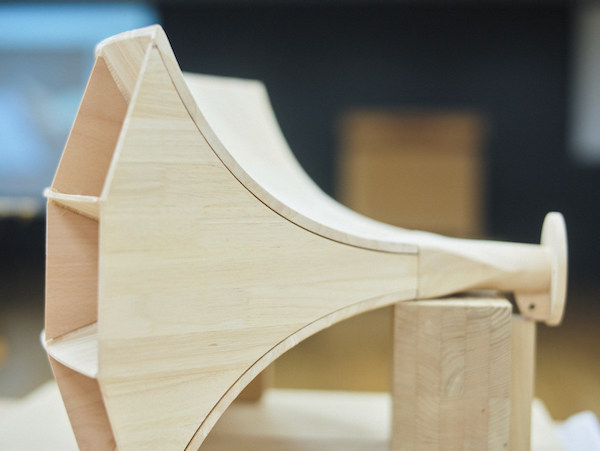
Part 2 of this article takes a behind-the-scenes look at the technical challenges faced at the factory in Aichi, the heart of Karimoku Furniture’s manufacturing. This story unveils the realization of the wooden horns by 3D-machining technology, the development of the three speaker models, named Sanjo, Rokujo, and Nurikabe, and the birth of a furniture collection that acoustically reinterprets Japanese aesthetics.
