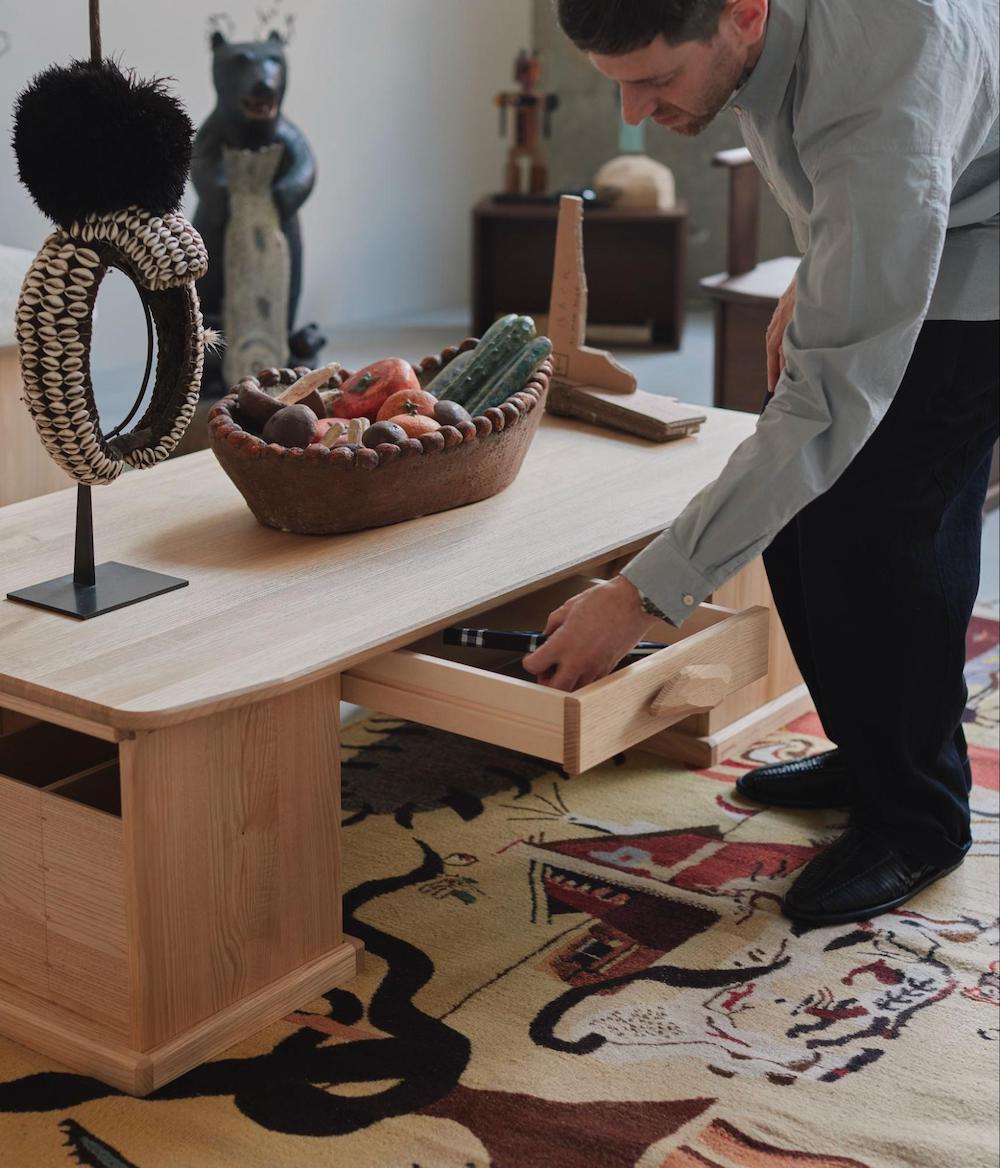
In October 2024, Karimoku Furniture Inc. launched a new project titled “KARIMOKU RESEARCH.” The “Survey” at the core of the project takes up four themes a year, and is conducted in partnership with creators, designers, artists, companies, and other parties, both inside and outside Japan, on each theme. The insights obtained from the “Survey” provide the basis for the display and development of new solutions that are not confined to furniture.
The theme of the third “Survey” is “TIMELESS CHANGE.” The “Survey” delved into the question of what lives with time and is left by time. Postalco Design Studio, which was founded in Brooklyn, New York and is now based in Tokyo, participated as a researcher. It continues to make products with a focus on everyday living, and applies its unique perspective in designing everything from apparel and furniture to space.
Today, when disposable items have become the norm, Postalco is pursuing designs that are premised on long-term use. A particularity about rigorous Japanese-style production born of dialogue with Japanese artisans forms a solid foundation for its designs. The fusion of its philosophy and Karimoku Furniture’s technology created STAKKO stowage furniture. We conducted an interview with Postalco’s Mike and Yuri about the efforts that culminated in the birth of STAKKO.
The text of Part 2 focuses on the course of the development of STAKKO stowage furniture, strict particularity about materials and technology, and the concrete expression of TIMELESS CHANGE. In addition, it provides information on a new lifestyle proposed by Postalco through STAKKO.

This time, Postalco set foot in the domain of stowage furniture as opposed to chairs. Behind this move was some ethical soul-searching about its role in “increasing products” as a designer.
“From time to time, I would have misgivings about whether the fast-paced increase in the amount of merchandise in the world beyond the current level was really okay. An even bigger factor was our commitment to making designs with the desire to help customers have various good experiences through products that can be used for a long time.” (Mike, Postalco)
As Mike sees it, many people have “so-so” articles that they thought were good at the time of purchase but ended up not using or are reluctant to discard because they were high-priced. This, in turn, results in an increase in drawers and shelved cabinets that they do not want to open. Mike saw a need for taking another look at stowage places in order to put such articles in order or dispose of them.
The objective was to carefully select what was really important to you instead of merely stowing everything, and keep those articles in plain sight in daily life. In other words, the point was to prompt a reconstruction of our connectivity with the things we have.
STAKKO stowage was born as a result. Postalco boldly dispensed with drawers and left the front of the shelving open.
“We placed precedence on a comfortable and pleasant character that was not too perfect. We figured it would be okay even if the contents are slightly visible and a little crumpled; we chose a design that allows the owners to using their ingenuity and choose articles. By having the stowage fronts open to show the articles inside, STAKKO promotes a change in your consciousness of the things you have. At the bottom of this concept are the whimsy and the warmth in the Postalco spirit. The logo looks handwritten, and anything can be freely put into the furniture. With the desire to spread the word about it, we conceived this display. We thought STAKKO went well with objets created from the free ideation of Makoto Kobayashi, who opened Out of museum.” (Yuri, Postalco)
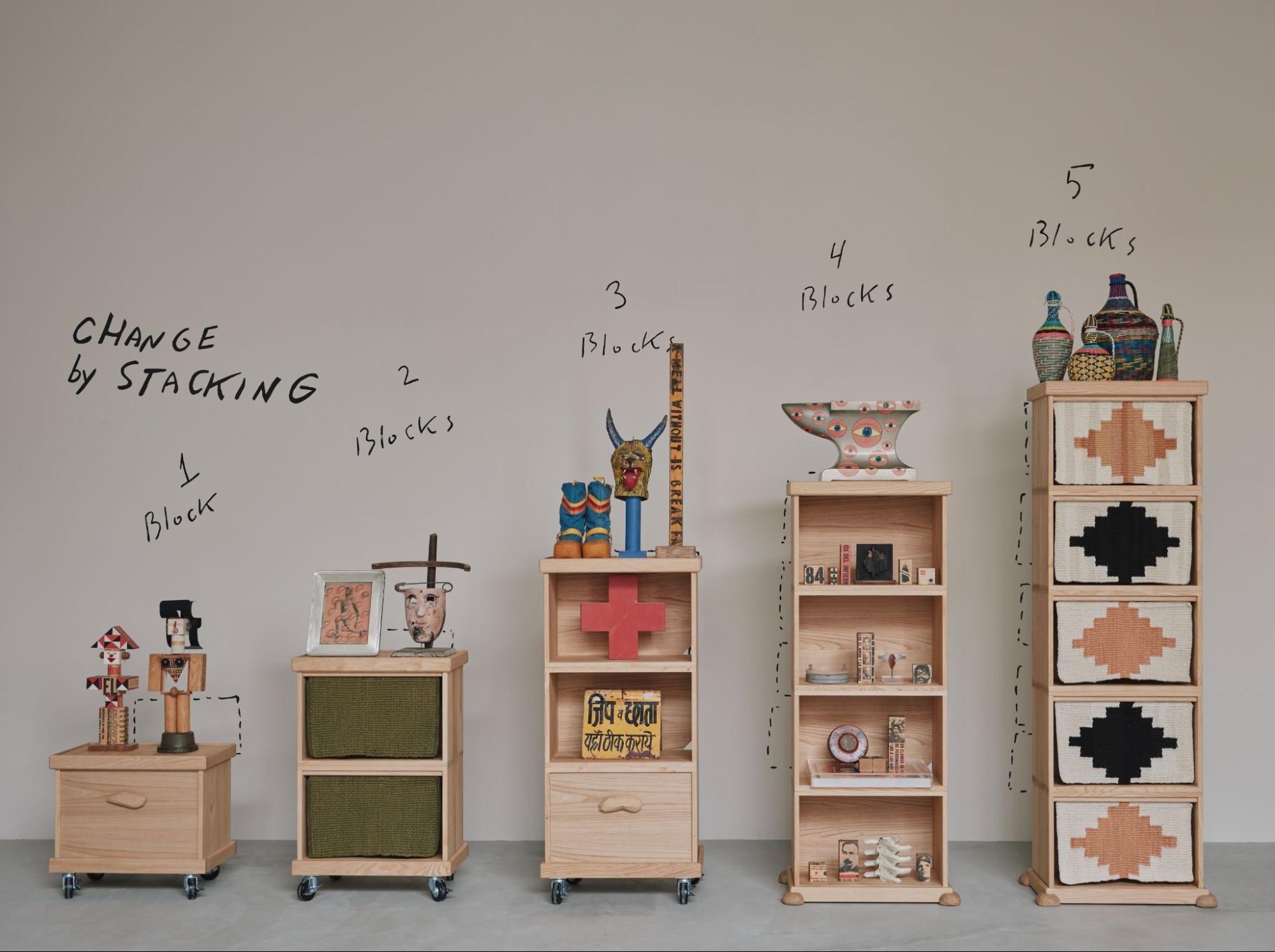
The idea of TIMELESS CHANGE embodied by STAKKO and Postalco-like expression STAKKO was born from development that took about one year, a relatively short time.
Mike firmly links the theme TIMELESS CHANGE and the personality of furniture, which can adapt to big changes in people’s lives.
“The occasions when people let go of furniture are almost always those of big changes in their lives, such as moving, a change of cohabiters, and the birth of children. At such times, there is generally a change of numerous pieces of furniture.” (Mike, Postalco)
Some pieces of furniture may remain with the owner even after life-changing events such as moving and changes in family composition. If so, these are not simply tools, but “articles that accompany their owners in the various stages of their lives.” As such, they are precious existences that share memories. In Mike’s view, in the case of a favorite jacket that is worn for many years, the owner may get a feeling approaching a sense that memories abide in it.
To give concrete form to this philosophy, Mike envisioned STAKKO as a type of furniture whose shape could be adjusted (by means of its modularity). It was given its name by Yuri, because of the ability to stack things on or in it. Similarly, for the logo, Postalco went with a playful design that takes chunks of wood as its image.
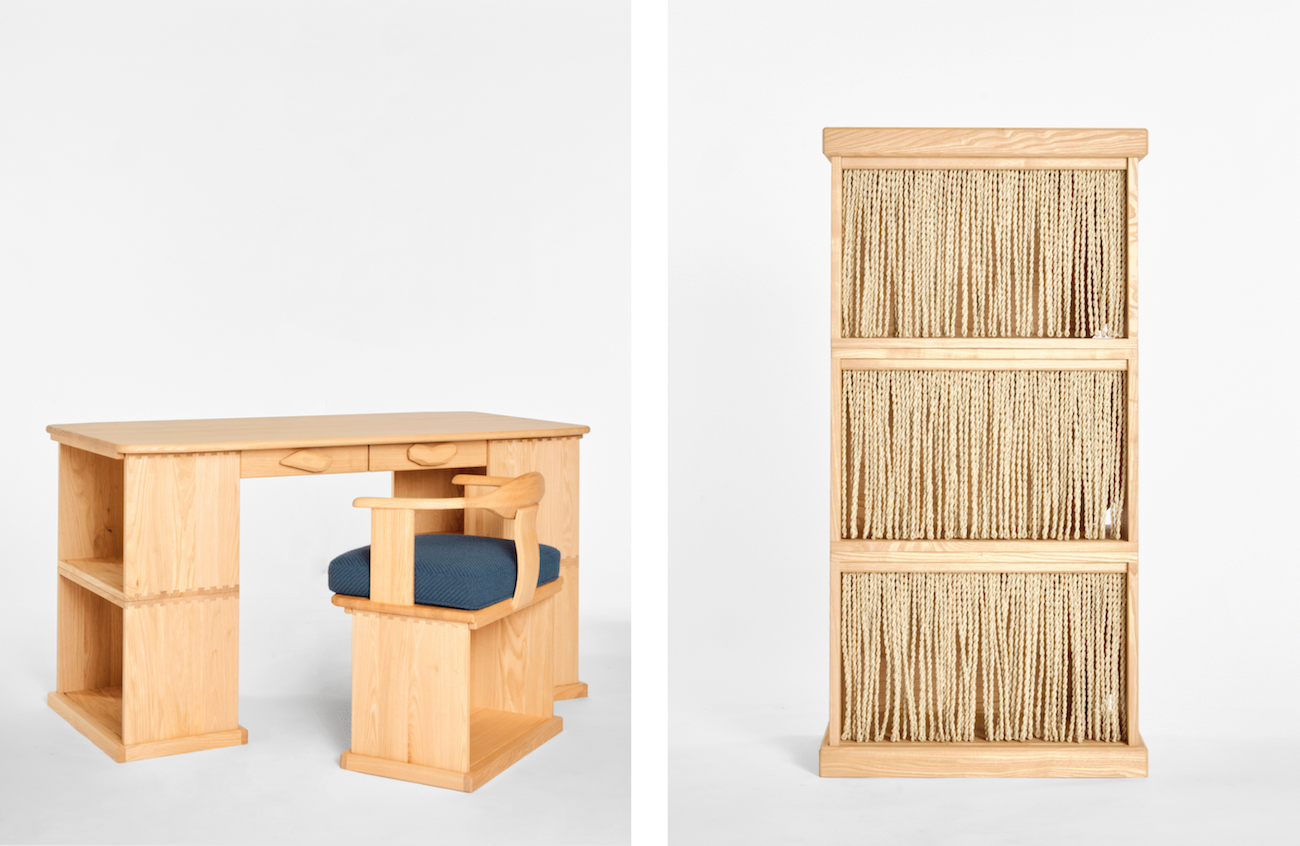
At the core of STAKKO is the trinity of materials, technology, and detailing.
For materials, Postalco uses pure Japanese-grown chestnut wood laid in through Karimoku’s own supply route. The biggest appeals of pure wood are that it looks good even if scratched, and can be used and enjoyed for a long time. Unlike furniture that is not premised on long-term use and is made by pasting wood-grain sheets on particle board, STAKKO is designed on the premise of changing beautifully along with the passage of time.
Dovetail joints are used for joining. This is a traditional technique in box manufacture that joins two pieces which resemble dove tails. (The Japanese term for these pieces is arihozo, which translates as “ant tenons.”) Such joints are characterized by a high resistance to slippage or detachment, and a good strength without the use of nails or screws. This completion in which the cut faces of the wood are shown as lovely details cannot be accomplished unless the wood is pure. The technique beautifully highlights the changes in wood grain and makes for a design that affords enjoyment of even every single joint. In addition, based on its long years of experience, Karimoku Furniture is in possession of profound know-how enabling it to tell the extent to which wood can be dried without causing trouble in such forms as warping and cracking later on. It is precisely this know-how that makes an accurate assemblage of parts possible.
For the finishing, the project adopted Karimoku Furniture’s distinctive coating technology that applies several layers of a thin polyurethane coating film. This heightens durability while preserving the natural ambience of wood. While he usually prefers an oil finishing, Mike praised Karimoku Furniture’s finishing with layered coats of thin polyurethane film as well as its rigorous drying and precise processing technology. He said that this finishing does not detract from the natural aura of wood, and was durable and very easy to clean every day. In short, it achieves an exquisite balance between utility and beauty.
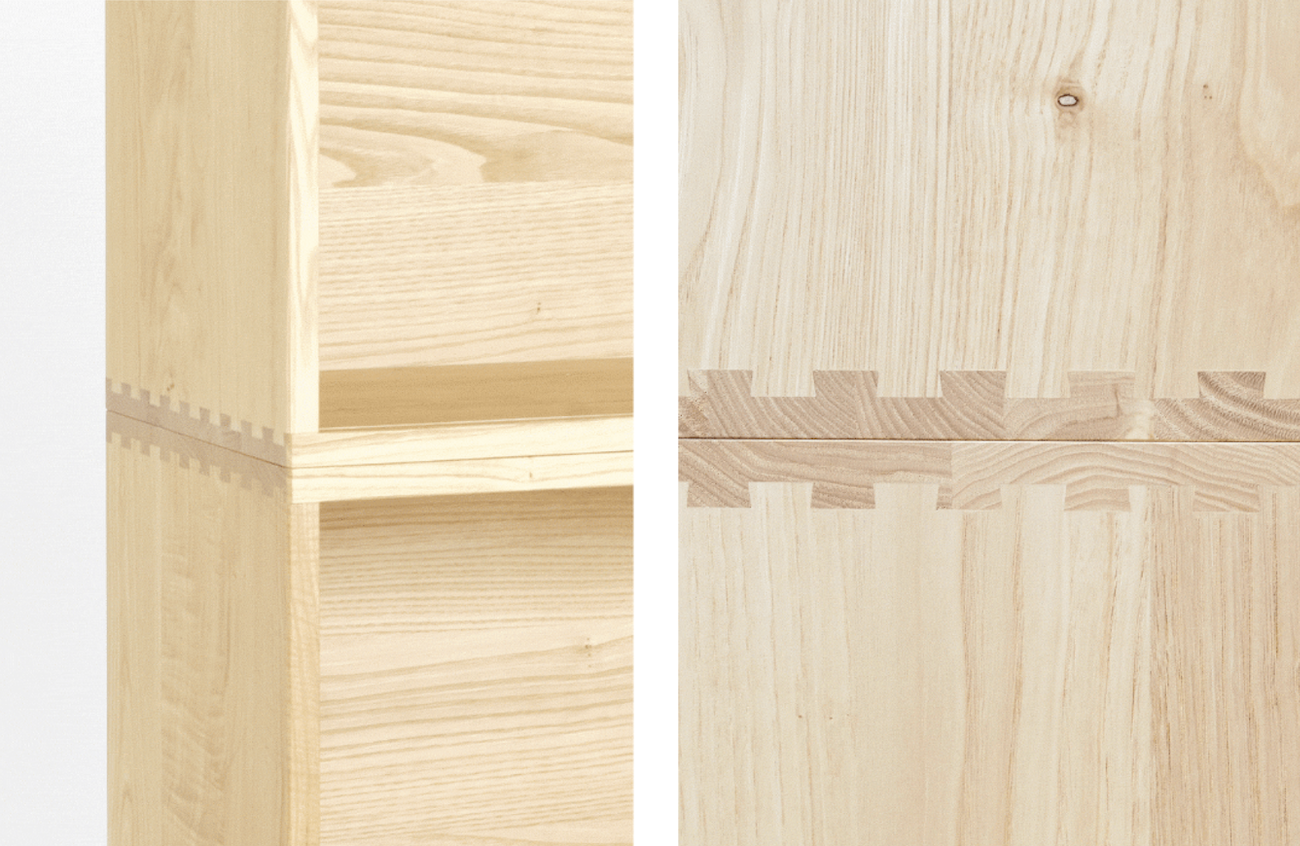
Details imbued with a warmth and whimsy were also added to STAKKO.
To respond to everyday needs for “just a little covering” on the drawerless open shelving, two options are offered. One is the nawa noren, a corded curtain made of rushes by Kyoto artisans. The curtains do not completely hide the contents, but instead leave them only half-covered. Mike cleverly compared the curtains to the nawa noren at the entrances to yakitori restaurants that make you want to take a peek inside. The rushes are the same material as that used for the surfaces of tatami mats. The owners can enjoy their change of color with time, and they generate a synergy with traditional Japanese craftsmanship and Karimoku Furniture’s technology.
The other option is hand-woven, hand-dyed rugs made in Argentina. Karimoku furniture has straight wooden frameworks made with exacting precision. In contrast, rugs and nawa noren have a playfulness due to the soft look and feel of their slightly irregular handiwork. The combination of the two intentionally generates an emotional effect: the hard edges seem to have been removed somewhat, and this makes it easier to live with the furniture. This combination of mutually different materials is what produces a warm expression in keeping with Postalco’s character.
For legs, Postalco used parts called “chunks” that are produced by shaving chunks of wood. It resolutely made plentiful use of wooden chunks that are otherwise liable to be left in the forest. The chunks are jagged but make one want to touch them, and so make an ingratiating impression. The use of chunks with this kind of presence erases the image of sterility associated with modular furniture and strikes a balance without heaviness that befits Postalco.
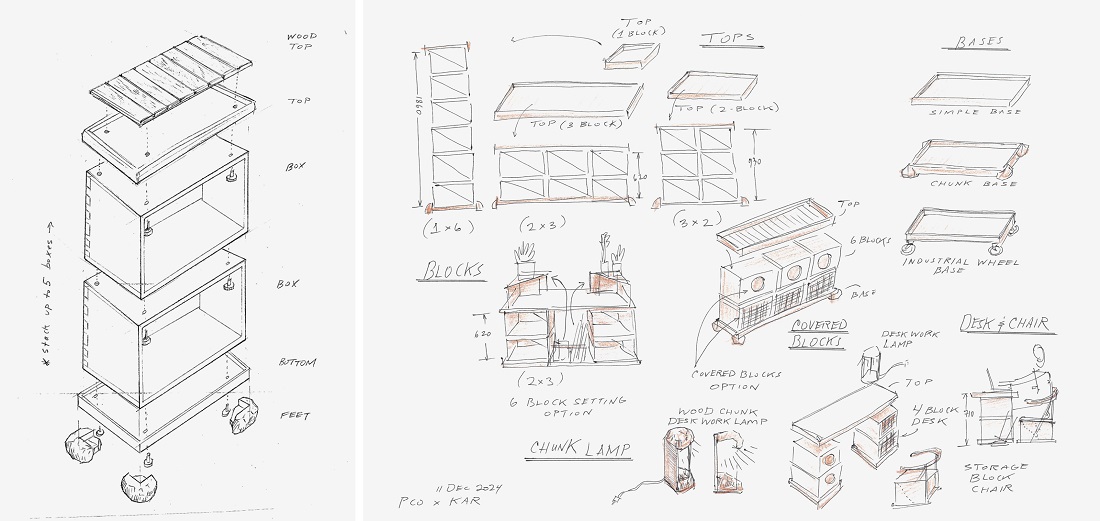
Metal system furniture is apt to leave a cold impression. STAKKO made modules adjustable while retaining the warmth of wood.
This flexible structure is also ageless and genderless, and can be used anywhere. The conceivable types of space for use cover a wide range including the home, home offices, retail space, hotels, and hospitals.
What Postalco is offering is soothing space surrounded by wood and achieved through STAKKO. It strongly recommends use in places lit by natural sunlight as opposed to fluorescent lamps, which are apt to make the space look sterile.
Postalco has an unwavering vision aspiring to not only the creation of beautiful products but also a contribution to the resolution of fundamental problems facing contemporary society, through design. This vision encompasses involvement with major tasks such as developing alternatives to plastic and tackling food supply issues. Postalco also wants to play a role in education in the careful transmission of Japanese-style craftsmanship culture to the next generation.
Yuri described the philosophy at the core of craftsmanship at Postalco.
“People say we are human-centric, but we think we are body-centric. In other words, we take bodily sensation as the starting point in our conception of products. We are determined to continue maintaining this attitude without change.” (Yuri, Postalco)
“As an extension on this line, we are also interested in products that are directly engaged with the body, such as prosthetic limbs and legs. The development of titanium materials and other new technologies is moving ahead. Under these circumstances, we think that incorporation of the concept of manufacturing with warmth into the design of prosthetic limbs, which are inevitably liable to have a cold feeling even if their functionality rises, is extremely vital for society.” (Mike, Postalco)
The production of STAKKO was a major result in this collaboration between Postalco and Karimoku Furniture. It gives us high hopes that the idea of TIMELESS CHANGE pursued by both companies will keep progressing in the future as well.